

There is a particular kind of energy that arrives when movement becomes more than a task on a checklist. It is the spark that comes from climbing a staircase without losing your breath, carrying groceries with ease, or waking up in the morning and feeling your body ready for the day. Fitness, at its best, is not a performance staged for the mirror. It is a living companion, adaptable and forgiving, waiting to fit itself around the shape of your real life.
That is the good news: you do not need a perfect schedule, a boutique gym membership, or a personality built for marathon training to feel stronger. You need a plan that respects your rhythm, your responsibilities, and the season you are in. Whether your days are packed with meetings, stretched thin by parenting, or filled with travel and shifting time zones, movement can still find you. The trick is learning how to make it portable, pleasurable, and sustainable.
Start with the body you have today
Fitness advice often arrives dressed in impossible expectations, as if everyone is beginning from the same starting line. In reality, each body carries its own story. Some bodies are returning to movement after years away. Some are managing injuries, chronic conditions, or the simple exhaustion of a full life. Others are already active but crave more balance, more strength, or less pain.
That is why the most useful question is not, “How fit should I be?” but “What does my body need right now?” Maybe it needs a walk that loosens your shoulders after a day at a desk. Maybe it needs a slow, steady session that rebuilds trust after an injury. Maybe it needs a joyful burst of dance in the kitchen before dinner. The right routine is the one that meets you where you are and invites you forward without scolding you for not being somewhere else.
Begin by noticing what already feels natural. Do you enjoy being outside? Do you prefer quiet solo movement or the momentum of a group class? Are mornings bright and promising, or does your energy come alive after sunset? The best fitness plan is not the most impressive one; it is the one you can return to again and again.
Build around the essentials: move, strengthen, recover
At its core, a balanced fitness lifestyle rests on three pillars: movement, strength, and recovery. Think of them as the roads, the structures, and the rest stops of your personal journey.
- Movement keeps your body supple and your circulation humming. Walking, cycling, swimming, dancing, hiking, or simply taking the long route home all count.
- Strength helps you carry life more easily. It supports your joints, improves posture, and makes ordinary tasks feel lighter.
- Recovery gives your body time to adapt, repair, and grow. Sleep, hydration, stretching, and rest days are not luxuries; they are part of the work.
A healthy routine does not require each pillar to be grand. Fifteen minutes of brisk walking, twenty minutes of bodyweight strength exercises, and a few minutes of stretching can do more for your long-term wellbeing than an ambitious burst followed by weeks of inactivity. Consistency, not intensity alone, is what transforms effort into progress.
For busy professionals: let fitness hide in plain sight
If your calendar is a mosaic of meetings, deadlines, and messages that never stop arriving, fitness needs to become wonderfully practical. The idea is to tuck movement into the seams of your day rather than waiting for a mythical free hour to appear.
Start with short sessions that feel almost deceptively small. Ten minutes before breakfast. A brisk walk during lunch. A quick strength circuit after you close your laptop. These fragments can add up, especially when repeated across the week. The body responds to frequency as much as duration, and momentum has a way of building quietly.
Desk-bound days benefit from movement snacks: standing up every hour, rolling the shoulders, stretching the hip flexors, or taking phone calls on the move. If you commute, get off one stop early. If you work from home, set a timer and walk around the block between tasks. If you travel for work, pack a resistance band and use the hotel room floor as your studio.
For professionals who feel mentally drained by the end of the day, choose workouts that lower friction. Lay out clothes the night before. Keep a pair of sneakers near the door. Pick a playlist that signals it is time to shift gears. The less decision-making required, the easier it becomes to show up even when motivation is low.
For parents and caregivers: make movement a family affair
Caregiving changes the terrain. Time becomes fragmented, energy becomes precious, and solitude can feel like a rare currency. Yet this stage of life also offers a beautiful opportunity to redefine fitness as something woven through the family rhythm rather than squeezed into the margins.
Children are natural movement partners. They sprint, jump, squat, climb, and tumble with a level of enthusiasm adults often forget. Join them. Turn a park visit into a circuit of play. Race across the grass. Use a stroller walk as a chance to power up hills. Dance while dinner simmers. The goal is not perfection; it is participation.
When alone time is scarce, simplify the routine. Two or three short workouts a week can be enough to maintain strength and energy. Bodyweight exercises are especially useful because they require little equipment and can happen beside a crib, a playground bench, or the edge of a living-room rug. A few rounds of squats, push-ups against a wall, lunges, and planks may be all you need to keep the body engaged.
It also helps to release the idea that a workout must be uninterrupted to be worthwhile. If a child wakes up in the middle of your session, you have not failed. You have adapted. Fitness for caregivers is often a practice of flexibility, and flexibility is a form of strength.
For older adults: strengthen what supports your freedom
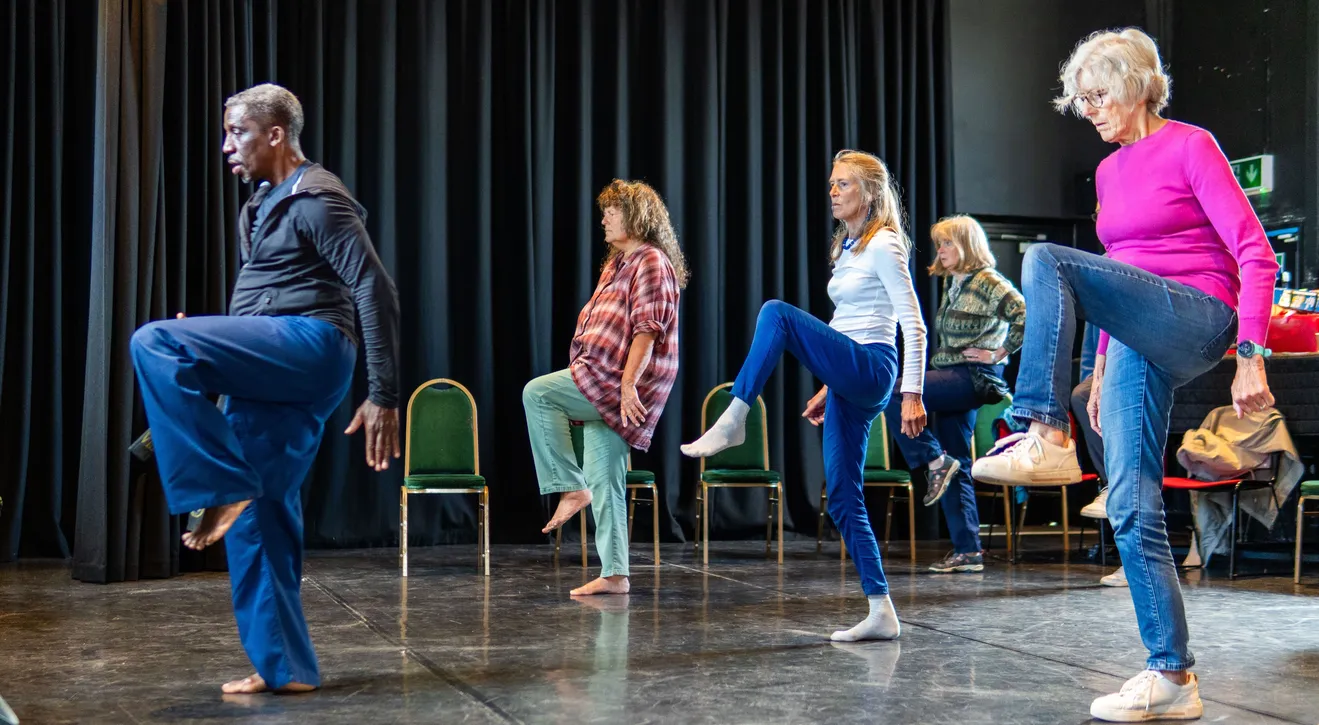
As the years accumulate, movement takes on a more vivid importance. Fitness becomes less about chasing aesthetics and more about preserving independence, steadiness, and confidence. The ability to rise from a chair, balance on one foot, and carry a basket of laundry with ease are not small achievements. They are the architecture of daily freedom.
Strength training is especially valuable here. Muscles naturally decline with age unless they are challenged, but the good news is that they respond at every stage of life. Simple exercises with light dumbbells, resistance bands, or even bodyweight can improve posture, support bone health, and make ordinary tasks easier.
Balance work deserves a place in the routine as well. Standing on one foot while holding a countertop, walking heel to toe, or practicing gentle yoga can reduce the risk of falls and improve body awareness. Pair this with regular walking, which nourishes the heart, keeps joints moving, and provides the kind of daily rhythm that makes the world feel accessible.
For older adults, recovery may need more attention. Warm up gradually. Stay hydrated. Listen carefully to pain signals. And celebrate the steady gains that often arrive quietly: fewer aches after gardening, easier stairs, more stable footing on uneven ground. These are victories worth noticing.
For beginners: make the first steps smaller than you think
Many people delay fitness because they imagine it must begin dramatically. They wait for the perfect program, the perfect moment, the perfect version of themselves. In truth, beginners thrive on simplicity. The first goal is not transformation. It is repetition.
Choose one habit that feels almost too easy. Walk for ten minutes after dinner. Do five minutes of stretching when you wake up. Complete one short strength session each week. The point is to create an identity around movement: I am someone who exercises, even if only briefly at first. Once that identity takes root, it becomes easier to expand.
Beginners also benefit from tracking progress in practical ways. Notice how your breathing changes, how your posture feels, how your mood shifts after movement. Not every improvement appears on a scale or in the mirror. Sometimes progress looks like better sleep, less stiffness, or more patience in traffic.
And remember: awkwardness is part of the process. Every seasoned runner, lifter, yogi, or cyclist was once a beginner who did not know where to place their hands or how to breathe through the effort. There is no shame in starting slowly. There is only the quiet courage of beginning.
For travelers: keep your routine light and portable
Travel can be one of the great disruptors of fitness, but it can also be one of the most inspiring settings in which to move. Cities invite walking. Beaches invite swimming. Mountain villages invite hiking. Even airport terminals, with all their fluorescent impatience, can become unexpected stages for keeping the body awake and resilient.
When you are on the road, aim for minimum effective movement. A twenty-minute hotel workout. A morning stretch beside the window. A walk through a new neighborhood before breakfast. The goal is not to recreate your exact routine, but to preserve the thread of it. This keeps your body from feeling abandoned as your surroundings change.
Pack with intention. A pair of versatile shoes. A resistance band. Comfortable layers. A refillable water bottle. These small choices make it easier to stay active without overthinking logistics. And when local culture invites movement, say yes. Take the stairs in a historic building. Rent a bicycle. Join a beach yoga class. Let the destination shape the workout. That is part of the pleasure of travel: discovering how a place moves.
Make exercise enjoyable enough to return to
The most effective routine is not the one with the harshest discipline, but the one that carries a little delight. If you dread every workout, the plan may be misaligned with your temperament, your schedule, or your interests. Fitness should challenge you, yes, but it should also offer some form of reward beyond the afterburn.
Experiment until you find what clicks. If gyms feel sterile, try parks, trails, and home workouts. If running feels oppressive, try cycling, swimming, boxing, or dancing. If solo exercise feels lonely, find a class or a friend. If you crave structure, follow a program. If you crave freedom, build your own mix-and-match routine.
Music can transform effort into rhythm. So can scenery. A sunrise walk along a quiet street. A trail lined with pine and damp earth. A neighborhood full of market stalls and early commuters. Sometimes the best motivation is simply being somewhere beautiful enough to keep moving through it.
Use strength training as your anchor
Among all forms of exercise, strength training is one of the most universally useful. It supports metabolism, protects joints, improves balance, and helps the body handle everyday demands with less strain. You do not need a heavy barbell to benefit. Squats, lunges, push-ups, rows, and hinges can be adapted to nearly any fitness level.
Think of strength work as building the scaffolding of a resilient life. A stronger back makes carrying luggage easier. Stronger legs make stairs and hikes less daunting. Stronger core muscles support posture, reduce fatigue, and help you feel more centered in your own frame. Two or three sessions a week can make a meaningful difference, especially when paired with regular walking or other cardio.
Progress can be gradual: one more repetition, a slightly heavier weight, better control, deeper range of motion. These small shifts matter. They are the mileage markers of a body becoming more capable.
Recovery is part of the route, not a detour
In a culture that glorifies nonstop effort, rest can feel suspicious. But recovery is where adaptation happens. Muscles rebuild. Energy returns. The nervous system settles. Without enough recovery, even the most elegant workout plan can begin to feel like a tax rather than a gift.
Prioritize sleep as if it were training, because in many ways it is. Drink water throughout the day. Eat enough to support your activity level. Stretch gently after effort. Take days off when needed. And notice the difference between healthy fatigue and the kind that signals you are pushing beyond what your body can currently support.
Recovery also includes mental softness. You do not need to be perfect to be progressing. Missing a session does not erase your effort. A week that includes walking, strength, stretching, and rest may be far more effective than a week of all-or-nothing intensity.
Let your routine reflect the life you actually live
Fitness becomes sustainable when it feels like an extension of your values rather than an obligation imposed from outside. If you value family, choose activities you can share. If you value independence, train for strength and mobility. If you value adventure, build a routine that makes travel easier and movement more playful. If you value peace, let walking or yoga become your daily reset.
The most enduring fitness habits are often the least glamorous. They look like lacing your shoes on a rainy morning. They look like a ten-minute stretch after a long day. They look like choosing the stairs when your legs are willing. They look like getting back up after a break, without drama or self-judgment.
To feel stronger and live better is not to become someone else. It is to become more fully at home in your own body, in the weather of your own days. It is to move through life with a little more ease, a little more stamina, and a little more trust that your body can carry you where you want to go.