

There was a time when being online all the time was the flex. You were responsive, reachable, available, and, apparently, thriving. Your phone buzzed like it was personally responsible for the economy. Your inbox was a haunted house. Your screen time report looked like a cry for help. And yet we called it productivity. Cute.
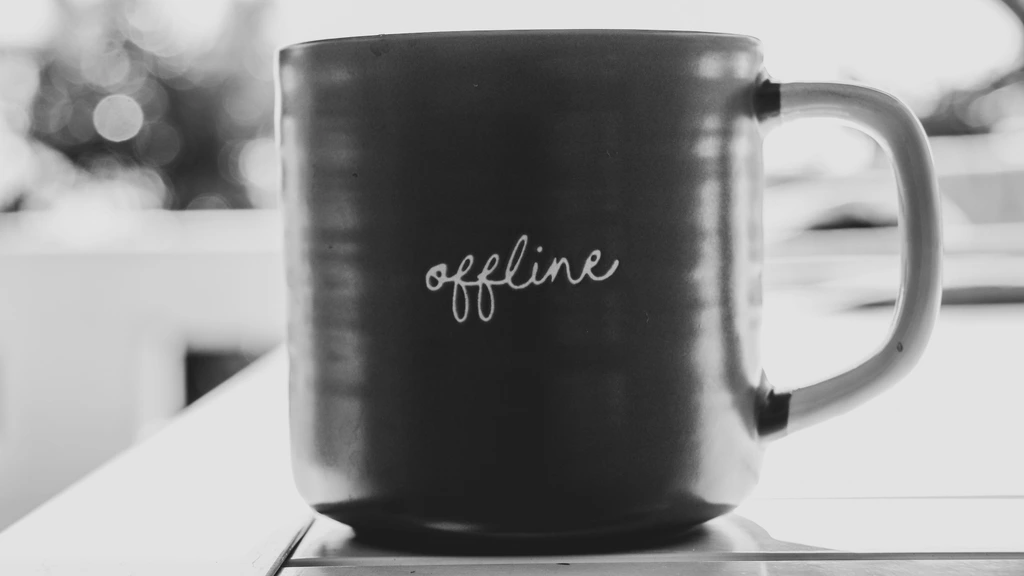
Now the vibe has shifted. Quietly, then all at once, people are acting like the ultimate status symbol is no longer the latest gadget or the hottest app. It’s being hard to reach. It’s not answering texts for hours. It’s disappearing into the woods, the mountains, or, if you live in a city and have one single functioning adult boundary, just turning off notifications after 7 p.m. Offline is having a moment. And honestly? It deserves the PR campaign.
The new rich person activity: being unavailable
Luxury used to mean square footage, designer labels, and a bathroom that did not have weird landlord energy. Now, increasingly, luxury is time, attention, and peace. The ability to not be interrupted every 14 seconds feels rarer than a clean subway seat. In a world where every platform wants your eyeballs, your data, and your soul in exchange for a mildly funny video, opting out has become aspirational.
That’s the thing about constant connectivity: it pretends to make life easier while somehow making everything feel urgent, fragmented, and vaguely unwell. The second your phone lights up, your nervous system behaves like a raccoon in a kitchen. Offline, by contrast, has started to look less like a sacrifice and more like a flex. A deeply stylish, highly underrated flex.
People are paying for that feeling in all kinds of ways. Wi-Fi-free retreats are filling up. App timers have somehow become a form of self-care—which, sure, is a little on the nose, but we’ll allow it. People are also rediscovering analog pleasures that would have seemed painfully earnest a decade ago: paper books, handwritten notes, film cameras, and actual conversations. The kind where no one checks a notification halfway through a sentence like a deranged little office goblin.
Why logging out feels so good
There is a reason that disconnecting feels delicious. Our brains were not designed to process this many alerts, messages, headlines, and hot takes before breakfast. The modern internet is basically a casino, a newsroom, a mall, and a group chat all welded together. No wonder we are fried.
Logging out gives your attention a place to land. It lets your thoughts finish a sentence. It creates room for boredom, which, annoyingly, is often where the good stuff lives. Boredom is where ideas show up. Boredom is where you remember you like jazz, or want to learn ceramics, or maybe just need a nap and a snack and a personality reset. Constant stimulation is not the same thing as a full life. It is often just noise wearing a productivity costume.
There is also the tiny miracle of not being perceived every second. When you are offline, you are not curating, performing, reacting, or documenting. You are just existing. Wild concept. You can go for a walk without turning it into content. You can eat dinner without lighting it like a product shoot. You can have a thought and keep it to yourself, which, in the age of oversharing, is practically a monk-level achievement.
The burnout era finally hit its limit
Of course, this whole offline trend did not emerge because everyone suddenly became spiritually enlightened. It emerged because people are tired. Deeply, embarrassingly tired. The promise of always-on culture was that it would make us more efficient, more connected, and more successful. Instead, it made us accessible to everyone at all times, which is not the same thing and has never been the same thing.
Work bled into home. Home bled into work. Leisure became content. Friendships became scheduling puzzles. Rest got turned into a performance metric. We got trapped in an economy of responsiveness, where the fastest reply wins and silence is treated like a moral failing. The result? A generation of people looking at their phones like they owe them money.
So now there is a backlash, and it makes perfect sense. People are setting boundaries because they have discovered that being constantly available is not a virtue. It is often just unpaid emotional labor with a battery icon. The appeal of offline life is not that it is anti-tech in some dramatic, crunchy, Luddite way. It is that it is anti-exhaustion. And exhaustion, as it turns out, is not a personality.
Offline doesn’t mean disappearing forever
Let’s be honest: no one is actually giving up the internet in a full hermit fantasy unless they have very specific goat-related goals. The modern version of offline luxury is not total abandonment. It is intentional use. It means choosing when to be reachable instead of letting the algorithm decide. It means using technology as a tool instead of letting it chew up your entire attention span and spit out your self-worth.
This is where the grown-up version of digital wellness comes in. Not the fluffily branded, overpriced version with a jade roller and a vague promise of “balance.” The real version. The one where you mute the group chat that somehow became a 24-hour sports bar for other people’s opinions. The one where you stop doomscrolling at midnight and discover, to your astonishment, that sleep is in fact useful. The one where you do not need to respond immediately to prove that you are a good friend, employee, or human being.
Offline is not about becoming inaccessible in a dramatic and annoying way. It is about reclaiming some control over your own mind. That is the actual luxury: not being dragged around by every ping, buzz, and breaking alert like a labrador in a thunderstorm.
The status signal has changed
For years, digital presence was a marker of relevance. If you were everywhere, you were important. If you were posting, commenting, and staying current, you were in the game. Now the signal has inverted. The people who seem most desirable are not the ones who are glued to their phones. They are the ones who are selectively, mysteriously, and infuriatingly hard to pin down.
We are seeing this in subtle ways. The rise of private accounts. The appeal of invitation-only communities. The growing admiration for people who do not overshare every meal, mood, or minor inconvenience. Even social media itself has started to feel a little desperate, like it knows the party is ending and it is trying to keep everyone from finding the exit.
Offline reads as confidence because it suggests you do not need to prove your existence every hour. It says your life is happening somewhere other than the feed. It implies that your time is valuable enough to protect. And in a culture that monetizes attention like it is a mineral resource, that is basically royalty behavior.
There is, admittedly, a small amount of privilege baked into this. Not everyone can log off without consequences. Some people need to be reachable for work, caregiving, safety, or all of the above. So when we talk about offline luxury, we should be clear: this is not about judging people for being online. It is about recognizing how precious uninterrupted time has become, and who gets to claim it.
How to be a little more offline without becoming weird about it
You do not need to move to a cabin or announce a digital cleanse like you are entering a wellness competition. Small moves count. In fact, the small moves are usually the ones that stick, because they do not require you to become a new person with a linen wardrobe and a sourdough starter.
- Turn off nonessential notifications. If your phone is buzzing for every like, reply, and app promo, it is not a phone anymore. It is a needy little slot machine.
- Make one room or one hour phone-free. Dinner, the bedroom, the first hour of your morning — choose a boundary and defend it like it has a legal team.
- Stop treating response time like a character trait. Reply when you can, not when panic tells you to.
- Schedule real offline time. Walk, read, cook, sit in a park, stare at the ceiling thoughtfully. Revolutionary stuff.
- Audit your feeds. If an account makes you feel frantic, insecure, or vaguely inferior, unfollow it with confidence. Curate your environment like it matters, because it does.
The point is not to become inaccessible to everyone. The point is to become less accessible to the things that steal your attention and then hand it back to you in shreds.
The emotional appeal of being unreachable
Part of the offline fantasy is obviously about rest, but part of it is about dignity. Being constantly on call can make people feel like they exist for other people’s convenience. Logging out, even a little, is a reminder that your attention is not public property. Your time is not an all-you-can-eat buffet. Your brain is not a coworking space for every app on Earth.
That reclamation can feel weirdly emotional. People often underestimate how much low-grade stress comes from the sense that something might be waiting for you. A message. A task. A headline. A request. A little red badge of doom. When you step away from that loop, the silence can feel disorienting at first.
Eventually, it begins to feel like relief, then peace, and—if you’re especially lucky—something even better: normal.
Once you’ve experienced that, the old way starts to seem a little unhinged. Why were we all comfortable being interrupted so constantly? Why did we allow apps to colonize our downtime, or treat 47 open tabs as a lifestyle? Part of it was convenience, and part of it was habit. Another factor was the seductive belief that more connection automatically created more meaning. We know better now—or at least we’re trying to.
Maybe the future is quieter than we thought
The offline movement is not really about nostalgia. It is not a longing for a simpler past that probably wasn’t all that simple unless you were rich, lucky, and selectively remembering. It is more like a correction. A collective realization that being plugged in all the time has costs, and that those costs eventually show up in our sleep, our focus, our relationships, and our general tolerance for nonsense.
So yes, offline is the new luxury. Not because it is exclusive for the sake of being exclusive, but because it protects something increasingly rare: undivided attention. And undivided attention is powerful. It is how we connect deeply, think clearly, rest properly, and occasionally remember that life is not supposed to feel like a never-ending notification panel.
Maybe the most modern luxury is not more access, more content, or more optimization. Maybe it is the ability to say, “Actually, I’m good,” and mean it. To put the phone face down. To miss a few things on purpose. To choose the moment you enter and the moment you leave.
That is not withdrawal. That is taste.